Whispers from the Desert: My Erasmus+ Youth Exchange in Croatia’s Own “Sahara”
Project: Erasmus+ Youth Exchange
Location: Đurđevac, Croatia
Dates: 17 to 25 August 2026
Sending Organization: Jovesolides Egypt
Let me back up. “Whispers from the Desert” was an Erasmus+ Youth Exchange held in Đurđevac, Croatia, from 17 to 25 August 2026, co-funded by the Erasmus+ Programme of the European Union. Thirty of us—young people from Egypt, Croatia, Spain, Türkiye, and Jordan—spent nine days living, eating, and working together, using deserts, nature, and sustainability as the excuse to actually talk to each other. I went as part of the Egyptian team, sent through Jovesolides Egypt. Here’s what actually happened, and what I think I’m walking away with.
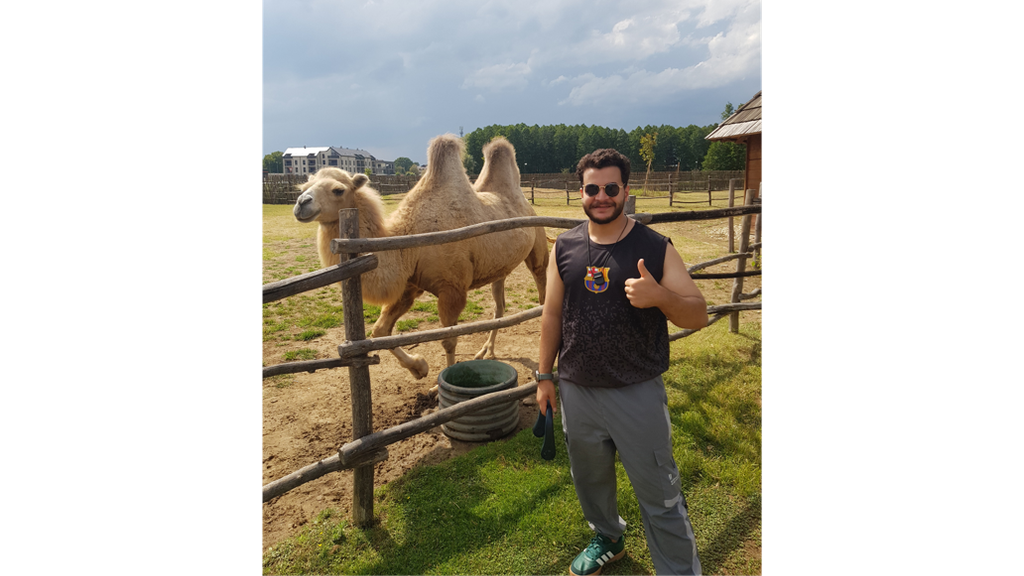
[Camel photo with participant]
Strangers on Day One
We landed on the 17th, dropped our bags into shared dorm rooms at Hostel Borik, and by the next morning were sitting in a circle trying to hold onto thirty new names at once. The first full day was almost entirely team building, and it felt exactly as stiff as icebreakers always do. Then, somewhere around the second session, it stopped feeling like an exercise and started feeling like an actual group.
Naming What We’d Assumed
Day three is the one I keep coming back to. We sat down as Egyptians, Croatians, Spaniards, Turks, and Jordanians and said out loud, one by one, the stereotypes we’d absorbed about each other’s regions. Not the polished version. The real one. People from Europe named what they’d picked up about “the Arab world” from headlines and films; we named what we’d absorbed about Europe in return. Nobody got defensive, because nobody was being accused of anything. We were just tracing where each assumption had actually come from. By lunch, more than half of them had quietly stopped making sense.
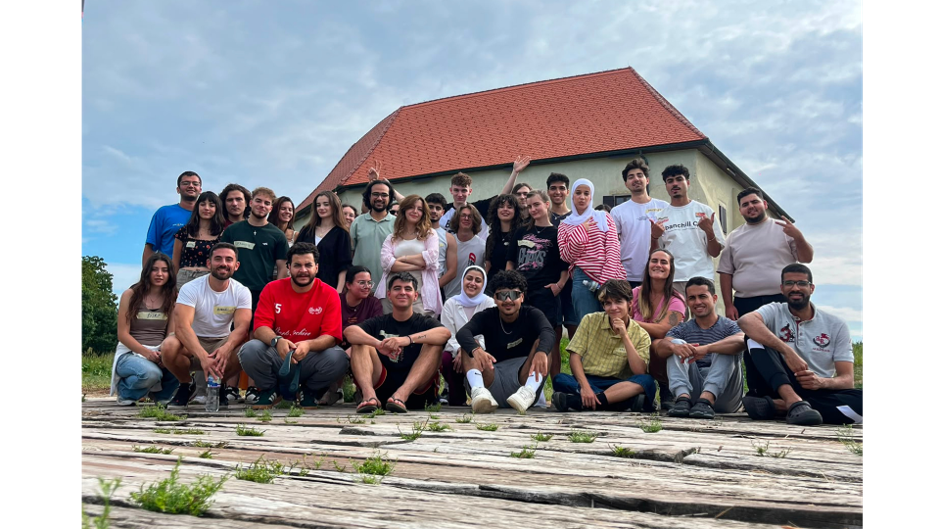
[Group photo in front of the building]
A World Full of Deserts
The rest of the day, we had an input session from St. George, a local Croatian organization that ran its own workshop with the group that same day.
Day four continued the theme. We visited Đurđevac’s own visitor centre for Đurđevački pijesci, the sandy stretch locals proudly call the “Croatian Sahara,” and spent the rest of the day comparing deserts across all five of our countries. I found myself, more than once, explaining the actual Sahara to people who’d only ever seen its small, sandy Croatian cousin.
Nature, a Forest, and an Evening to Show Off Our Countries
Day four ended with a walk through Borik Forest, right behind the hostel, built around one specific question: how does nature actually affect our physical and mental health? We weren’t just told the answer. We were handed calming techniques and asked to try them on the spot, standing among the pine trees.
That evening was the Intercultural Evening: fifteen minutes per country to present as creatively as possible, snacks and drinks included.
A Slower Day, Then Standing Up for Egypt
Day five was quieter by design: a session with Ajeto, another local NGO, in the morning, then genuine free time to explore the town, rest, or just talk to people outside of a structured activity. A week this dense needs at least one day to breathe, and I appreciated that pause more than I expected to.
Day six is where everything came together for me. Every country’s team was responsible for designing and delivering at least one session to the whole group, and ours landed that day: “Sea, rivers, and mountains as part of cultural identity.” We’d spent real time before the exchange working out how to explain, to people who’d never seen it, why the Nile isn’t just a river to us, and why the Red Sea coast and the mountains of Sinai carry as much identity as our desert does. Standing in front of the full group and watching it actually land was one of the best ten minutes of the whole week.
What Sustainability Actually Means
Sustainability kept resurfacing across the back half of the week, in different forms. What the word actually means once you strip away the buzzword version of it. How it connects specifically to desert life. Some genuinely frank moments about what any of us are actually willing to change. I walked in assuming I already understood sustainability reasonably well. I walked out with a much more specific, much less comfortable version of that understanding.
Planning What Comes Next
Day eight wasn’t about new input. It was about turning the week into something that outlasts the week. We planned our dissemination activities—this article being one of mine—talked through how five countries in one room might actually stay in touch and collaborate again, and spent real time reflecting on what each of us had individually developed. That reflection is exactly what the Youthpass certificate tied to this project is meant to recognize: not just a nice memory, but specific, nameable competences.
What I’m Taking Home
Beyond the photos and the desert, I’m taking home a few lessons that I think will stay with me:
Public Speaking: Real practice presenting to an international group under an actual deadline, which will carry into research presentations and future projects.
Breaking Stereotypes: Learning how quickly assumptions disappear through simple, honest conversations.
Independence: Navigating everyday challenges like sharing rooming, local transportation, and cross-cultural communication built greater confidence.
If You’re Thinking About Applying
If you’re a young person in Egypt reading this and wondering whether something like this is realistic for you, it is, and it’s a lot more accessible than most people assume.
Erasmus+ Youth Exchanges are fully funded: travel, accommodation, food, and activities are covered or reimbursed, so cost isn’t the barrier people think it is. You don’t need to already speak the host country’s language, just workable English. You don’t need any special background. You need curiosity, reliability, and a willingness to be uncomfortable for a few days. At the end, you walk away with a Youthpass certificate recognizing competences you can actually name in an interview. All you need to get started is a sending organization watching for open calls. Mine was Jovesolides Egypt.
“Whispers from the Desert” (Project 2025-1-HR01-KA152-YOU-000298951) was co-funded by the Erasmus+ Programme of the European Union, with Jovesolides Egypt as the sending organization and a host team in Đurđevac, Croatia.
This website uses cookies. We use your data, which will be recorded in our backend. By clicking a button, you consent or decline this.